Guides / Sourcing
Bag Manufacturer in Vietnam: Soft Bags, Luggage and What a Turnkey Scope Includes
October 6, 2026
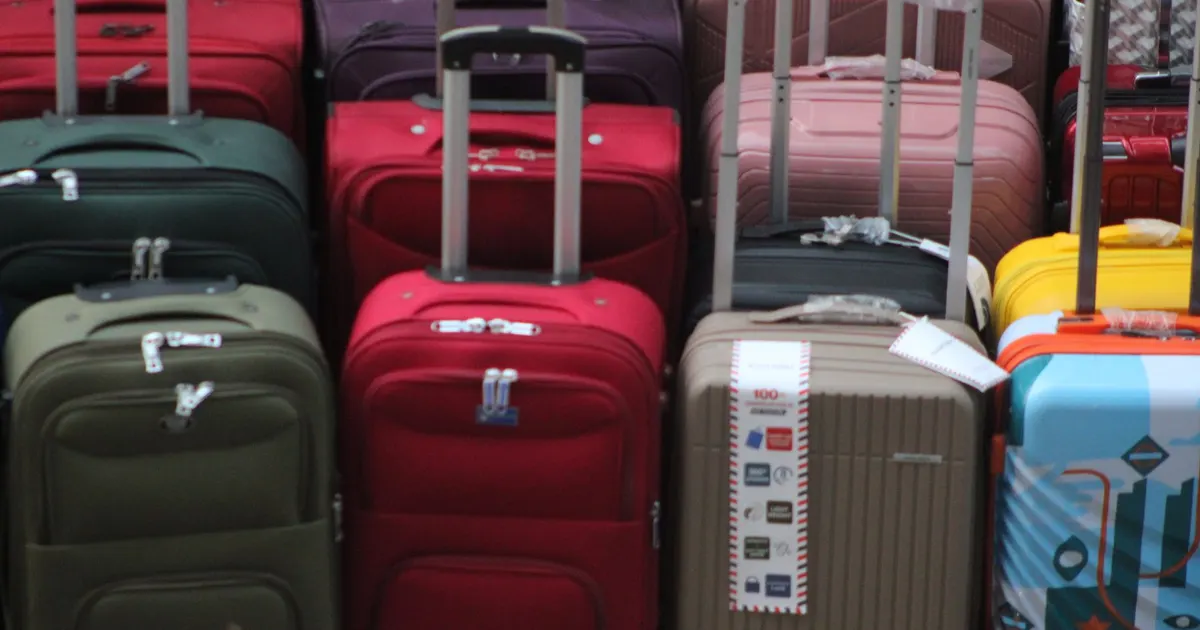
A bag is a simple object with a long bill of materials. A backpack can contain twenty fabric and trim lines, a frame, foam, webbing, several zippers and a printed label. Each one has to be bought, cut, sewn and checked, and a single weak seam or cheap zipper decides the product’s review score. That is why bags are one of the best examples of a turnkey scope: the factory is not only sewing, it is managing a supply chain.
This guide describes the main bag categories, what the factory does at each step, which components decide quality and what to check before shipment.
Main bag categories
| Category | Typical build | Key quality risks |
|---|---|---|
| Backpacks | Sewn fabric body, padded straps, foam back panel | Strap anchor stitching, zipper strain |
| Totes and shoppers | Simple sewn panels, handles | Handle attachment, seam strength |
| Duffels and sports bags | Sewn body, webbing straps, base panel | Base wear, zipper size |
| Cosmetic and pouch bags | Lined, small zippers | Lining, colour transfer |
| Soft luggage | Fabric shell, frame, wheels, telescoping handle | Handle mechanism, wheel durability |
| Hard-shell luggage | Molded polycarbonate or ABS shell, hardware | Shell cracking, latch strength |
Most sewn bags use similar processes. Hard-shell luggage adds molding and tooling and fits the plastics chain more than the garment chain.
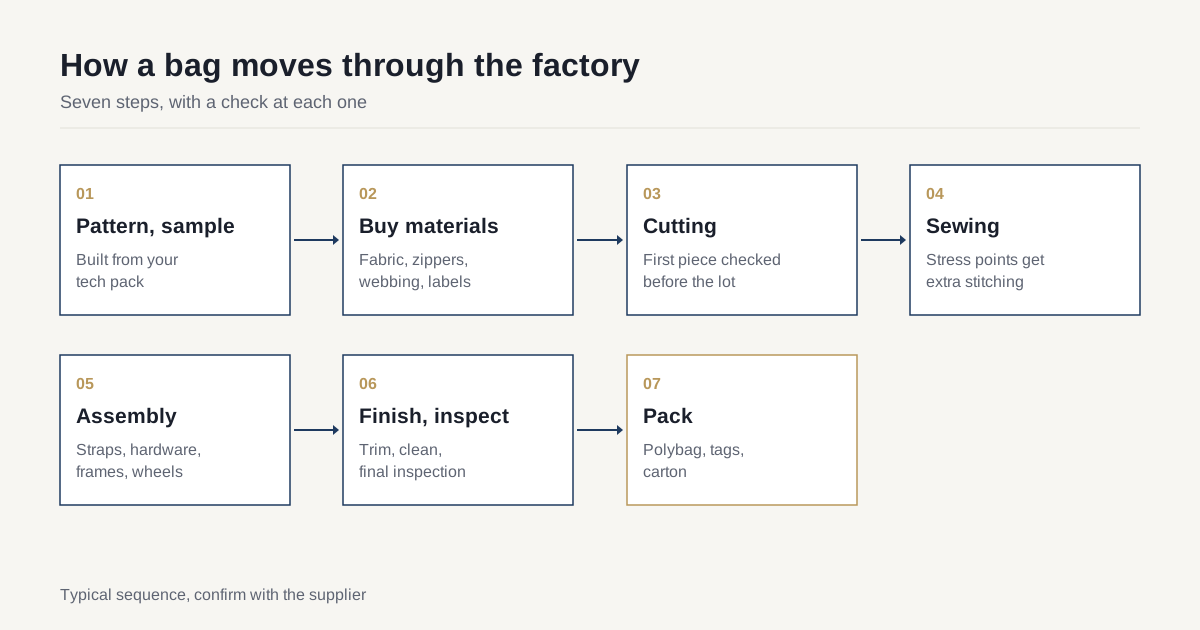
The production steps
- Pattern and sample. The factory builds a pattern from your tech pack and sews a sample. Expect more than one round.
- Material buying. Fabric, lining, foam, webbing, zippers, buckles and labels are bought for the order. See fabrics and trims for soft goods.
- Cutting. Fabric is cut by die or by cutting table. Cutting accuracy affects the whole bag.
- Sewing. Panels, pockets and straps are sewn in stages. Stress points get reinforced stitching.
- Assembly. Straps, hardware, frames and wheels are attached.
- Finishing and inspection. Thread trimming, cleaning, label attachment and inspection.
- Packing. Stuffing paper, polybags, hang tags and cartons.
Ask the factory to show the process flow and the checks at each stage.
Components that decide the quality
Fabric. Weight, fibre, coating and finish set the feel, wear and water resistance. Name the specification instead of a fabric nickname.
Zippers. The most common failure point. Specify the size, tooth type, slider design and brand level. A large bag with a small zipper will split.
Webbing and straps. Width, material and breaking strength. Backpack straps carry weight, so test them on finished units.
Buckles and hardware. Material, finish and strength. Plastic buckles can crack in cold. Metal hardware can corrode.
Foam and padding. Density and thickness on straps and back panels.
Wheels and handles on luggage. Bearings, wheel material, handle mechanism and fixing method. Ask for a durability test, not only a sample.
Labels. Content, language and placement. Some markets require labelling on materials and origin.
Tests to ask for
- Seam strength at stress points such as strap anchors and handle joins.
- Strap and handle load test at a stated load for a stated time or number of cycles.
- Zipper cycle test at a stated number of open and close cycles.
- Abrasion and tear resistance of the main fabric.
- Colourfastness to rubbing, water and light.
- Water resistance if you claim it, using a defined method.
- Luggage tests: handle extension cycles, wheel rolling over a set distance and drop tests.
- Chemical limits on fabrics, coatings and plastics where your market sets them.
Test on the production sample or a pilot unit, not a different model. Ask for the report and keep it with the signed specification. For acceptance limits on the finished batch see AQL inspection levels explained.
Cost and minimums
Fabric and trims are the largest cost block in a sewn bag. Custom fabric brings its own minimums, often in the hundreds or thousands of metres per colour. Using the factory’s stock fabric reduces the minimum.
Labor varies with complexity. A bag with many pockets and bound seams costs more to sew than a tote.
Tooling is smaller for sewn bags, mostly patterns and cutting dies. Hard-shell luggage and custom hardware need molds.
Packaging depends on retail needs. Hang tags, inserts and polybags add up.
Typical first-order minimums are 500 to 1,000 per style and colour for sewn bags, with more for hard-shell luggage because of tooling. See MOQ by product type in Vietnam for how fabric minimums become order minimums. For the pricing basis, read turnkey manufacturing cost in Vietnam.
What to put in a tech pack
A tech pack is the document the factory sews from. Include:
- Drawings with dimensions and tolerances, front, back, side and inside.
- Bill of materials with fabric, trim and hardware specifications.
- Construction notes: stitch type, stitch density, reinforcement points.
- Colourways with a physical standard.
- Label, logo and placement.
- Packing instructions.
- Test requirements and pass levels.
A sample made from a tech pack with gaps will have gaps. Take time here and how to write a turnkey manufacturing brief will help you structure the rest.
Choosing a factory
Look at the factory’s own bag production, not only its sample room.
- Does it make bags at your complexity now, and can it show similar finished goods?
- How does it check seam strength and stitching on the line?
- Is cutting done to pattern with checks on the first cut piece?
- Who buys the zippers and hardware, and from whom?
- What does the final inspection cover?
Visit or send an inspector. Factory visit: what to check covers the questions, and how to verify a Vietnamese supplier covers paperwork.
Common mistakes
Approving a sample with different fabric. The sample used stock cloth and production uses another. State the fabric, or mark the sample as not final.
Under-specifying zippers. The zipper is the first thing a customer touches. Name the size and brand level.
Skipping the pilot. Strap anchors and fit show up in a pilot. See golden sample and pilot run.
Ignoring the market’s labelling. Content and origin labels are required in many markets. Fix them in the brief.
Not checking shipping. Bags compress, and luggage nests. Ask the factory about carton size and loading per container.
Hard-shell luggage in more detail
Hard-shell luggage belongs to the plastics chain more than the sewing chain. The shell is molded or thermoformed from polycarbonate, ABS or a blend, and each shell size needs its own tooling. Tooling cost is much higher than for soft bags, and the minimums are higher too.
The parts that fail in use are the wheels, the handle system, the zipper or latch closure and the shell corners. Specify each. Ask for a handle cycle test, a wheel roll test over a stated distance and a drop test with the case loaded to a stated weight. Check also how shells nest in the carton, because a nested pack saves freight and risks scuffing.
Many factories make soft luggage and hard-shell luggage in separate plants. Ask which plant will make yours and visit it. See injection mold tooling cost in Vietnam for how mold cost spreads over units.
Quality checks on finished bags
Before shipment, inspect a sample from the finished lot against the golden sample. Check dimensions, stitch quality, zipper action, label content, straps, cleanliness and carton marks. Apply an agreed acceptance level and record the result. Loose threads, crooked panels and uneven topstitching are the most common cosmetic defects, and each can be fixed at the line if the inspector reports it early.
A short bag brief
State these points and factories can quote the same product:
- Bag type, dimensions and capacity.
- Tech pack with bill of materials.
- Fabric, zipper and hardware specifications.
- Annual volume and first order per style and colour.
- Tests required and pass levels.
- Labels, packaging and retail needs.
- Target price and incoterm.
When you have these, send your brief and we will introduce up to three Vietnamese manufacturers that make bags at your volume.
Frequently asked questions
What types of bags are made in Vietnam?
Backpacks, tote bags, duffels, sports bags, cosmetic cases, laptop bags and soft luggage are made there, often by factories that also do garments or footwear. Hard-shell luggage is made too, but less widely, because it needs molding and frame tooling.
What is a typical minimum order for bags?
Many factories start at 500 to 1,000 per style and colour for sewn bags. Using stock fabric and standard hardware keeps the minimum low. Custom fabric, custom hardware and new molds raise it.
What tests should a bag pass?
Seam and strap strength, zipper cycle testing, abrasion and colourfastness of the fabric, and for luggage wheel and handle durability and drop testing. Say which method and which pass level you expect.
Ready to get this quoted?
Send the brief. We match you with up to 3 manufacturers in Vietnam that can carry your scope and reply within 24 business hours.
Get matched with a manufacturer